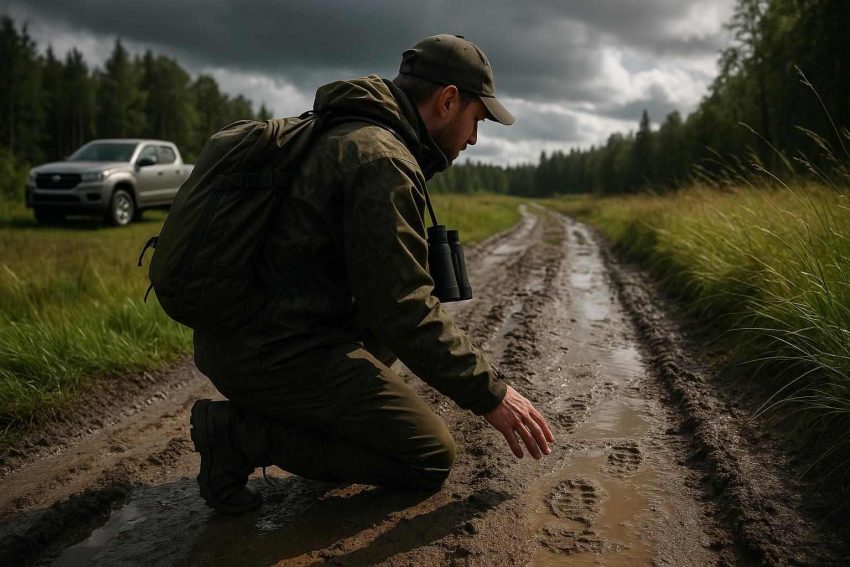
The truck is parked, the forecast has shifted, and the route that looked simple on a map now includes wet ground, stronger wind and a long walk back after dark. Those details should affect more than clothing. They may determine where you set up, what you leave behind, how much time you allow and whether the hunt remains responsible. Start by reading conditions, then build enough margin for safety, legality and a clean decision if the opportunity is not right.
Read the ground before selecting a position
Start with access, not equipment. Study terrain you can legally enter, identify likely travel corridors without assuming animals will use them, and note how water, cover, wind and human activity may alter movement. A position that looks promising from a distance may be poor once you account for noisy footing, limited visibility, an unsafe background or a difficult exit.
Walk the route in your mind from beginning to end. Where will you cross a fence or stream? Which areas become slippery after rain? Can you leave without crossing another hunter's position or disturbing sensitive habitat? Avoid trampling young vegetation, blocking established access routes or settling where repeated pressure could damage the ground. Conservation often depends on these small choices.
Let weather change the hunting setup
Weather affects more than comfort. Wind changes scent, sound and visibility. Rain can soften ground, obscure tracks and turn a quiet approach loud. Cold increases the consequences of wet clothing, while heat can make a long carry or extended wait more demanding than expected.
Choose gear for the conditions you are likely to face, not those you hope to find. Waterproof layers help when precipitation is probable but may become noisy or too warm during a dry, active approach. Insulation matters when you remain still; a lighter system may be safer on a sustained uphill route. A modular system-a base layer, weather shell and insulating piece-can adapt as conditions change.
Check visibility and footing before committing to a location. Fog, blowing snow, low light and glare can shrink the safe area around you. If you cannot clearly identify what lies beyond a potential shot path, the location fails an ethical standard, regardless of how attractive the sign appears.
Separate useful gear from reassuring gear
A full pack can create an illusion of readiness. Every item should answer a clear question: Does it help me move safely, stay oriented, communicate, handle a minor problem or make a responsible decision?
Navigation equipment, spare power, water, weather protection, a basic first-aid kit and communication may deserve priority over specialized accessories. A comfortable seat or low-profile pack is worthwhile if it helps you remain still without damaging vegetation. Choose optics for the terrain and light you actually expect, not an imagined perfect view.
Avoid buying for one dramatic scenario, carrying duplicate tools while forgetting basic layers or failing to test equipment with gloves or damp hands. Practice setup changes at home, and confirm that buckles, closures and controls work quietly and safely. If an item is awkward to reach, it may not help when conditions become stressful.
Check access and rules before leaving home
A legal opportunity is not defined by a general season or familiar property. Requirements can vary by location, species, method, land status, licensing category and date. Boundaries may change, and access permission may include conditions that are easy to miss.
Review current official hunting regulations, maps, notices and landowner instructions before the trip. Information saved from a previous season is not current authority. Confirm the identification, permits, tagging, reporting and equipment requirements for the area you intend to hunt.
Keep a simple record of what you checked and carry required documents or digital access. Verify local fire restrictions, road closures and temporary habitat protections as well. Compliance is part of ethical hunting, not paperwork added afterward.
Build an ethical margin into every decision
Preparation should make it easier to decline a marginal opportunity. Do not force a shot through obstructed visibility, excessive distance, unstable footing or uncertain identification. A position that leaves no room for a clean outcome is the wrong position, even after a long walk to reach it.
Consider what happens after a successful hit. Can you reach the area safely? Can you track without crossing restricted ground or causing unnecessary damage? Do you have enough time, light and physical capacity to complete recovery responsibly? Answer these questions before settling in, not during a hurried moment.
Keep clear of homes, roads, livestock areas and other users as local rules require. Avoid unnecessary disturbance near nesting, wintering or other sensitive habitat. Ethical hunting includes restraint, accurate identification and a willingness to leave when conditions do not support a responsible choice.
Use one final check before you commit
Before leaving the vehicle or changing locations, confirm:
– Access is legal, permission is current and boundaries are understood.
– The forecast, wind, light and ground conditions fit the planned route.
– Clothing and footwear support movement and time spent stationary.
– Navigation, communication, water and basic emergency items are ready.
– The position offers a safe background and a clear path for any lawful shot.
– You have a realistic recovery and exit plan if conditions worsen.
– You know the current regulations and will stop if identification or safety becomes uncertain.
This review takes minutes but can prevent a poor decision from becoming a safety, legal or conservation problem.
Let conditions decide when to change plans
The strongest setup is not fixed. If wind shifts, access becomes unsafe, visibility fades or another group appears nearby, reassess rather than defend the original plan. A lighter pack may be better after a long approach, a warmer layer may become essential after sunset, and leaving early may protect both the hunter and the habitat.
Good preparation does not promise an opportunity. It provides a method for staying capable, lawful and measured as circumstances change. Choose equipment that supports that method, read the land honestly and leave enough margin to make the right call when the answer is no.